
How to Memorize a Monologue: A Practical Guide for Actors

Memorization does not have to mean reading the same page over and over until something sticks. In fact, passive rereading can make you feel like you know your lines when you have only become familiar with seeing them on the page.
A better approach to learning how to memorize a monologue is to understand how your memory works and build several different ways to access the same material. Once you know your lines confidently, you have more mental space to do what you actually came to the audition or rehearsal to do – act.
Key takeaways:
- Memorization is a tool for freeing up your attention to act
- Familiarity with a script does not always mean you can recall it
- Your relationship with a particular text can affect how easily you learn it
- Different deadlines call for different memorization approaches
- A monologue does not have to feel perfect before you can keep working with it
Why Memorizing Your Lines Is About More Than Knowing the Words
For an actor, memorization is not the final goal. The goal is to know your lines well enough that you are no longer spending your attention trying to remember what comes next. When you are still searching for a line, part of your attention is stuck on the words, which makes it harder to listen, respond, make choices, and stay present in the scene.
Knowing your lines gives you freedom.
The more confident you are in your material, the more you can play with it. You can respond to your scene partner, explore your character, and make artistic choices without constantly worrying about whether the next line will disappear.
A useful memorization process should not simply help you recite a monologue; it should help you reach the point where the words feel available to you when you need them.
Find Out How Your Brain Connects With the Text
There is no single memorization method that will feel exactly the same for every actor. Some people naturally remember what they see. Others remember sounds, spoken words, movement, physical sensations, or where they were when they learned something.
You may already have a sense of whether you are more visually or auditorily inclined, but you do not have to limit yourself to one learning style. One of the most useful ideas in memorization is to create multiple memory links to the same material.
Think of each memory link as another route leading back to your lines. If you have only one route, losing that connection can leave you stuck. If you have several, you have more ways to find your way back.
Use Visual Memory Links
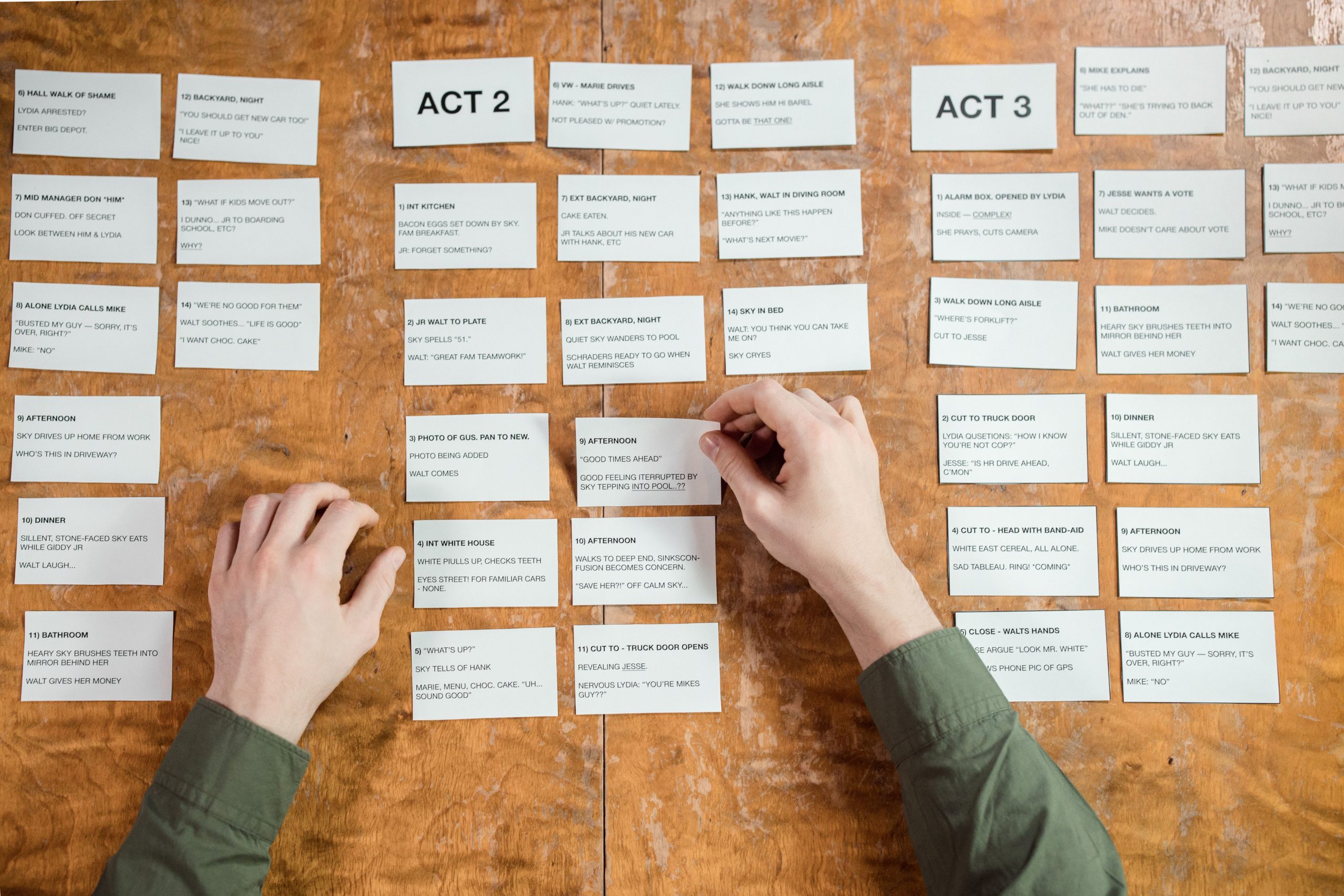
If you are a visual learner, the appearance of your text can become part of the memorization process. You might change the way the material looks each time you work with it. Try using different fonts, emphasizing different words, or breaking the text into different sections.
The point is not to create elaborate gimmicks. Instead, you are giving your brain different experiences with the same material.
This can be particularly useful when you have very little time to prepare for an audition.
Build Auditory Memory Links
Speaking your lines aloud gives you another route into the material. Listen to the words as you say them. Notice their rhythm, sounds, and sequence. You can also listen to other people speaking the material when appropriate.
Auditory links can be helpful if hearing language makes it easier for you to retain information, but even if you naturally rely on visual memory, it is worth building auditory connections too.
Bring in Movement and Physical Experience
Memory does not have to live entirely in your head. Movement, space, and activity can also become connected to your lines. You might associate a section of text with a particular movement, position, location, or physical action.
The more different pathways lead back to the same material, the more options you have for accessing it.
This becomes particularly valuable when you are under pressure.
Want to Understand the Psychology Behind Memorization?
Learning a monologue becomes much easier when you understand what is happening in your brain as you memorize. However, memory is only one part of the psychology that can shape your work as an actor.
If you want to explore more evidence-based tools for auditions, memorization, confidence, focus, and performance, my free newsletter brings practical psychology insights directly to you.
How to Memorize a Monologue Fast
Sometimes you have weeks to prepare. Other times, an audition lands in your inbox today, and the deadline is tomorrow. Those situations require different strategies.
When you have only a short amount of time, you cannot afford to spend hours simply reading the script and hoping familiarity will turn into memory. You need to make every minute count.
Stop Rereading and Start Actively Recalling
One of the biggest traps in memorization is repeatedly reading the same material. The more you read your lines, the more familiar they become. That familiarity can feel like knowledge.
You look at the page and think, “I know this. I know what comes next.” – but recognizing the next line while looking at the words is not the same as producing the line when the page is gone.
That distinction matters enormously in an audition.
Instead of constantly looking at the script, put it aside and try to say the material from memory. You will make mistakes. That is completely fine.
In fact, those mistakes are useful because they show you exactly where your memory needs more work. Active recall forces your brain to retrieve the information rather than simply recognize it.
Change How You Engage With the Text
If you are working under a tight deadline, you can still create multiple memory connections without turning memorization into a complicated project.
For a visual learner, for example, changing the appearance of the text can help.
Some tips to keep in mind:
- Print the material in a different font or change the way certain words are emphasized.
- Engage with the material actively each time.
- Do not spend your limited preparation time repeatedly staring at the page.
- Ask yourself what comes next. Say it. Check the script. Correct yourself. Then try again.
This process gives you much more information about what you actually know.
Use Chunking to Make a Monologue Manageable
Chunking is another useful way to approach memorization. Your short-term memory has a limited capacity. Instead of trying to hold an entire monologue in your head at once, divide it into smaller sections.
You might begin with five to seven chunks, depending on the length and complexity of the material. What belongs in each chunk is up to you. A chunk could be a few lines, a thought, a section of an argument, or another meaningful unit within the text. The important thing is to give your brain smaller pieces to work with.
As you become more familiar with the monologue, you can gradually change the size of those chunks. You might begin with seven sections, then combine them into four. Later, you might work with two larger sections before eventually experiencing the entire monologue as one continuous piece.
This progressive recombination gives your brain another challenge each time you change the structure. Eventually, the monologue can begin to feel like one complete flow rather than a collection of separate pieces.
When to Use Different Memorization Strategies
Your approach should change depending on the situation.
- If you have an audition tomorrow
Prioritize active recall. Do not spend your limited time endlessly rereading the script. Start testing yourself as soon as possible, identify your weak spots, and use several ways of engaging with the material.
If you are a visual learner, changing the visual presentation of the text can help create additional connections. And remember that you have limited opportunities to use sleep as part of the process, so make the time you do have count.
- If you have several days
You have more room to revisit the material. Combine active recall with different memory links and spaced practice. Give yourself opportunities to forget a little and then retrieve the material again. - If you have several weeks
Take advantage of the time. Start early instead of treating the deadline as permission to wait. Use repeated sessions, sleep, and the forgetting curve to gradually strengthen your memory.
What If You Don't Connect With the Monologue?
Sometimes a piece of text seems to click immediately. You may work through a scene and realize that you have memorized most of it much faster than usual. The words feel natural, the character resonates with you, and the whole process seems surprisingly easy – that can happen.
Different texts can appeal to different people in different ways. A particular scene, writer, character, or subject may connect strongly with your own experiences and artistic instincts. When that happens, pay attention. It can teach you something about yourself as an actor and as a learner.
But not every audition will give you that feeling. You may be asked to audition for a character you do not particularly connect with, but that does not make the preparation pointless.
An audition can introduce you to casting professionals even if you are not ultimately right for that particular role. It gives people a chance to see what you can do and remember you for future opportunities.
So do not assume that a lack of immediate emotional connection means you cannot learn the material effectively. Instead, focus on finding reliable ways to create memory links to the text.
Ready to Build Your Own Memorization Process?
If you want to go deeper into the psychology behind memorizing lines, Memorization for Actors explores practical tools actors can use to develop a more reliable approach to learning their material.
Your brain already has an incredible capacity for learning. The goal is to discover how to work with it rather than constantly fighting against it.
FAQs About How to Memorize a Monologue
The time varies depending on the length and complexity of the monologue, your familiarity with the material, and how much preparation time you have. A short monologue may take a relatively short time to learn, while more complex material can require repeated practice over a longer period.
Not necessarily. Understanding the context, character, and circumstances can help the material become more meaningful to you. However, you do not need to have every acting choice figured out before you begin learning the words.
Performance pressure can make it harder to access information you can recall easily when practicing alone. This is one reason it is useful to practice retrieving your lines in different circumstances rather than only rehearsing in the same environment.
Memorization itself does not make someone a better actor, but reliable recall can give you more freedom to focus on the actual performance. When you are not concentrating on remembering the next line, you have more attention available for your scene partner, choices, and performance.
For most auditions and performances, yes. Knowing the exact text gives you a reliable foundation while allowing you to focus your attention on the acting rather than trying to reconstruct the dialogue as you go.
First, identify exactly where the problem occurs rather than repeatedly starting from the beginning. That troublesome line may need its own memory connection or more focused retrieval practice before you return to the full monologue.